

Campaign · 02.03 - 02.04.2026
Different Minds -
Common University
A campaign drawing the attention of the entire academic community to neurodiversity.
Campaign Mission
We create a supportive environment and appropriate accommodations for everyone to nurture talents and ensure friendly education.
Acceptance of neurodiversity is a key element in building an increasingly aware community where everyone has the chance to develop their full potential.
Organizer
The campaign was prepared by the Vice-Rector for Community Development and Integration(opens in a new tab).
Wrocław University of Science and Technology · 2026
Start
02.03
2026 · Monday
End
02.04
2026 · Thursday
Duration
32d
All of March 2026
Program includes
- Workshops
- Training sessions
- Conference
- Consultations
Neurodiversity
Definition
Neurodiversity is the natural variation in human brains and information processing styles, including the autism spectrum, ADHD, dyslexia, or Tourette syndrome, and does not require "fixing". Its neurological basis, high potential for innovation, and the need for environmental adaptation are facts, while myths include perceiving it as a disease, a lack of empathy in neuroatypical people, or that it only affects boys.
Follow the campaign online
Posts, reels and podcasts – stay up to date
Throughout March 2026 we are publishing on our channels a series of posts, short reels and podcast episodes dedicated to neurodiversity. Follow, comment and share - together we build awareness.
Post series
Facts, myths and success stories
Reels / Shorts
Short video formats
Podcast
Conversations with experts and the WUT community
25
March
2026
Special event
Conference summarizing Neurodiversity Month and the campaign "Different Minds – Common University!"
Sessions, presentations, panel discussion
Session: Neurodiverse WUST community
A diverse WUST community from the perspective of neurodivergent people, their supporters, and those around them. Presentation of research findings on our mental health and opinions about psychological support at WUST.
Speaker
From willingness to support to self-knowledge. Neuroatypicality diagnosed in late adulthood
Wrocław University of Science and Technology
Speaker
Cross-sector cooperation to support the neurodiverse WUST community
Piotr Gajda
Speaker
A developmental place at the Faculty of Electrical Engineering - a space for everyone
Wrocław University of Science and Technology
Speakers
Good, average, or some other mental state? How do we feel at WUST?
Wrocław University of Science and Technology
Katarzyna Jach, PhD, DSc, Assoc. Prof. at WUST | Anna Borkowska, PhD, Assoc. Prof. at WUST(opens in a new tab)
The full research report will be published for the WUST community at rowna.pwr.edu.pl(opens in a new tab)
Session: Employer perspective
Neurodiversity through employers' eyes. Greater creativity and innovation, or a challenge for organizations?
Ewa Okołotowicz
Speaker
Diverse minds, better results - how is neurodiversity changing your organization?
Błażej Knapik
Session: Social expectations vs. science
Why are human minds different? What does science say about this and what are the consequences for our community?
Speaker
Different minds of different people - brain functioning
Wrocław University of Science and Technology
Speaker
A close person - expected support and barriers
Rafał Motriuk
Panel discussion
Mind outside the box: at work, at university, in society
Workshop: "Neurodiversity in the recruitment process. Employer's perspective"
The workshop was led by Ada Trzęsimiech from NOKIA.
The recruitment process can be challenging, especially when your senses and way of thinking differ from what a "standard" questionnaire assumes. During the workshop we demystified the job search process - we examined how a unique thinking style is perceived by recruiters and how to turn difficulties into strengths.
Recruiters' perspectives were discussed, along with practical tips on presenting strengths in applications and interviews, and communication best practices and accommodations that ease the selection process. Participants could also ask questions and discuss their specific cases.
Who is it for?
The workshop was open to all students. Neurodivergent individuals and those who want to consciously shape their career path were especially invited.
Schedule
from 02.03.2026
Calendar of cultural events friendly to neurodiverse individuals
Throughout the month.
Series of posts featuring a calendar of cultural events, specially curated for neurodivergent individuals.
from 02.03.2026
Psychological consultations for students, doctoral candidates, and staff
Throughout the month.
Psychological consultations available for the entire WUST academic community. Psychological consultations can be scheduled via the application: for students(opens in a new tab) and for employees and doctoral students(opens in a new tab).
from 02.03.2026
Individual consultations on neurodiversity
Throughout the month.
Individual meetings with the Rector's Plenipotentiary for Accessibility, Katarzyna Jach(opens in a new tab).
from 02.03.2026
Neurodiversity is among us - a success story!
Throughout the month · Post series.
Series of posts about people well known in the WUST community as well as global figures whose neurodiversity shapes their creativity, determination, and unconventional thinking.
from 02.03.2026
Ideas box - how else can we support neurodiverse individuals at a friendly WUST?
Throughout the month · Initiative.
Share your idea! Write to us at pomoc.n@pwr.edu.pl or find us in person.
from 02.03.2026
Facts and myths about neurodiversity
Throughout the month · Post series.
Series of posts in which we debunk harmful stereotypes!
from 02.03.2026
Support box - emotional self-regulation
Throughout the month · Exhibition.
Find out how to ease stress and anxiety using items tailored for neurodiverse individuals.
05.03.2026
Open day at the Typhloinformatics Laboratory
Open event.
Equipment showcase on the theme of "understanding neurodiversity".
12.03.2026
Workshops: "Alone - Between Us"
For students.
Issues regarding various needs during didactic classes from a student perspective.
16-18.03.2026
Awareness competition on neurodiversity
Competition for the WUST community.
A three-day awareness competition dedicated to the topic of neurodiversity.
16.03.2026
Training: "Neurodiversity in the academic environment: challenges and best practices"
For management staff.
17.03.2026
Training: "How to build daily routines conducive to health and life balance?
For students.
18.03.2026
Choreotherapy workshop
Open events.
19.03.2026
Sensory workshop using sensoplastics
Open events.
23.03.2026
Training: "Neurodiversity in the academic environment: challenges and best practices"
For working people.
24.03.2026
Workshop: "Being supportive to those around you and loved ones - how to help others wisely without burning out"
For students.
25.03.2026
Closing conference of the neurodiversity campaign "Different Minds - Common University"
A summary of the neurodiversity awareness month at Wrocław University of Science and Technology. An event gathering conclusions, best practices, and voices from the entire academic community collected throughout the campaign month.
27.03.2026
Workshop: "How to interact with and support neurodiverse individuals at the University - best practices"
Open events.
31.03.2026
Training: "How to build daily routines conducive to health and life balance?"
For staff and doctoral candidates.
As part of the campaign
Monday
every week
Hours
11:30 - 13:30
Period
02.03 - 02.04.2026
Individual meetings
Individual meetings on neurodiversity
As part of the campaign "Different Minds – Common University", we invite you to individual meetings with the Rector's Representative for Accessibility, Katarzyna Jach.
Rector's Plenipotentiary for Accessibility

dr. hab. eng. Katarzyna Jach, Professor at the University
The campaign in numbers
Over a month of a shared journey. Dozens of meetings. One community.
Ideas box and support box
As part of the "Different Minds - Common University" campaign, two tools have been launched to support the academic community. Click any location to open navigation in Google Maps.
Ideas box
We collect opinions and suggestions from the entire academic community to improve the quality of student and professional life for neurodiverse individuals. The box operates in two formats - electronically and on-site at four locations.
Electronic form
pomoc.n@pwr.edu.pl4 locations on-site
Where to find us?
room 1.08 · Department of Accessibility
Wybrzeże Stanisława Wyspiańskiego 23-25, 50-370 Wrocław
Cloakroom
Hoene-Wrońskiego 10, 50-376 Wrocław
Main entrance · Reception
Wybrzeże Stanisława Wyspiańskiego 27, 50-370 Wrocław
Psychological clinic · Reception
Zygmunta Wróblewskiego 25, 51-627 Wrocław
Support box
Items for emotional self-regulation, specially selected for neurodiverse individuals - ease stress and anxiety. No registration needed, just come to one of the five campus locations.
5 locations on-site
Where to find us?
room 1.08 · Department of Accessibility
Wybrzeże Stanisława Wyspiańskiego 23-25, 50-370 Wrocław
Campaign closing conference
Janiszewskiego 8, 50-372 Wrocław
Main entrance · Reception
Wybrzeże Stanisława Wyspiańskiego 27, 50-370 Wrocław
room 124 · Secretariat of the Vice-Rector for Community Development and Integration and the Vice-Rector for Student Affairs
Wybrzeże Stanisława Wyspiańskiego 27, 50-370 Wrocław
Psychological clinic · Reception
Zygmunta Wróblewskiego 25, 51-627 Wrocław
Did you know?
approximately 15–20% of the human population belongs to the group of individuals with a diagnosed neuroatypicality.
Source: zdrowiepsychicznewbiznesie.pl/neuroroznorodnosc

Educational Materials
autism&uni
Best practice guides to supporting higher education students on the autism spectrum (ASD)
About the Autism&Uni guide
Autism & Uni(opens in a new tab) is a European-funded initiative to help prospective and current students on the autism spectrum succeed at university.
Materials 01
Best Practice for HEI managers and senior academics
Materials 02
Best Practice for HE lecturers and tutors
Materials 03
Best practice for professionals supporting autistic students within or outside HE Institutions
Conversations about Neurodiversity
A series of four podcasts with Dr Katarzyna Zahorodna from Wrocław University of Science and Technology - a psychologist and philosopher who answers key questions about neurodiversity.
Conversations about Neurodiversity pt.1
The first of four podcasts in the "Conversations about Neurodiversity" series. Dr Katarzyna Zahorodna explains the basic concepts and introduces what neurodiversity actually is.
Podcast Guest
Katarzyna Zahorodna, PhD
Conversations about Neurodiversity pt.2
The second podcast in the "Conversations about Neurodiversity" series. Dr Katarzyna Zahorodna explores the topic of the autism spectrum, explaining that it is one of the natural variations in the functioning of the human nervous system.
Podcast Guest
Katarzyna Zahorodna, PhD
Conversations about Neurodiversity pt.3
The third in the series of podcasts from the "Conversations about Neurodiversity" cycle. Dr Katarzyna Zahorodna explains the issue of neurodiversity, its diagnosis, and behaviors depending on gender.
Podcast Guest
Katarzyna Zahorodna, PhD
Conversations about Neurodiversity pt.4
The last in the series of podcasts from the "Conversations about Neurodiversity" cycle. Dr Katarzyna Zahorodna explains the concept of neurodiversity in the context of the challenges and needs of today's academic environment.
Podcast Guest
Katarzyna Zahorodna, PhD
Universal guidelines and best practices
The following principles are not "special accommodations". They are best practices in communication and organization that work in every academic community.
What is essential for neurodiverse individuals usually makes things easier for everyone else too.
Principle 01
Communication: Say what you mean (literally)
Many neurodiverse individuals process language very literally. Understatements and hints generate unnecessary cognitive stress.
- Avoid "reading between the lines": Don't assume someone will guess your intentions from your tone of voice or facial expression. If you need something, say it directly.
- Precision instead of vagueness: Instead of "let's handle this soon", say "let's discuss this next Tuesday at 10:00".
- Verify understanding: Instead of asking "Is everything clear?" (to which most people will automatically say "yes"), ask: "What conclusions did you draw from these instructions?" or "Which point needs clarification?".
Principle 02
Predictability: Structure means a sense of safety
For individuals with ADHD or autism, unexpected changes are energetically costly.
- An agenda is essential: Whether it's a lecture or a student club meeting - a plan provided in advance allows for early preparation of cognitive resources.
- Announce changes: If you must cancel a meeting or change the room, do so with as much advance notice as possible and provide a specific reason.
- Clear deadlines: Set "hard" deadlines and explain the consequences of missing them.
Principle 03
Sensory: Respect the hardware limitations of the nervous system
The academic environment often involves sensory overload (noise, harsh lighting, crowds).
- Accept supporting tools: Noise-cancelling headphones, a hoodie, sunglasses indoors, or fidget toys are not whims - they are regulation tools.
- Take care of the space: If you're organizing a meeting, try to choose a quiet place with neutral lighting.
- Ask about preferences: "Does this light bother you?" or "Do you prefer we talk in silence, or is background music OK?".
Principle 04
Relationships and etiquette: Let go of neurotypical expectations
Many traditional social conventions are unnatural or exhausting for neurodiverse individuals.
- Eye contact: Not looking into someone's eyes does not mean not listening. For many people on the spectrum, maintaining eye contact is so intense that it prevents them from focusing on the conversation's content.
- Allow time for processing: Some individuals need a few extra seconds to formulate a response (so-called processing time). Don't rush them or finish their sentences for them.
- Respect "special interests": If a neurodiverse person is passionate about a specific topic, let them talk about it. It is often their way of building connections.
Principle 05
Neurodiversity is diverse
The most important principle: If you know one neurodiverse person, you know only one neurodiverse person.
- Don't assume everyone has the same difficulties. The best way to build a relationship is to ask sincerely: "In what way can I communicate information to you so that it's most comfortable for you?".
By applying these principles, you are putting the idea of Universal Design (Universal Design) into practice - because what is essential for neurodiverse individuals usually makes life easier for everyone else too. Who among us doesn't appreciate clear instructions and a quiet environment?
Green flags – what builds accessibility at the university
Here is a list of "green flags" - positive signals and attitudes that give neurodiverse individuals a sense of safety, acceptance, and genuine accessibility at the university.
Green flags – for academic teachers
- Clarity and transparency from the start
- Syllabus available from day one: Providing clear grading rules, deadlines, and class topics in advance is a major green flag. It allows for planning cognitive resources ahead of time.
- Accessibility statement: A lecturer who says at the first meeting: "If you need different forms of materials or specific accommodations, I invite you to consult me - we'll find a solution", builds instant trust.
- Normalizing supporting tools
- Accepting fidgets and headphones: A green flag is the absence of negative comments when a student uses fidget items, wears noise-cancelling headphones, a hoodie, or sunglasses. It demonstrates an understanding of self-regulation needs.
- Sharing notes/slides: Independently publishing lecture materials before or after class helps individuals with concentration difficulties (ADHD) or auditory processing challenges.
- Inclusive communication
- Using precise language: Instead of saying "soon", the lecturer says "by Friday at 3:00 PM". This removes the burden of guessing from neurodiverse individuals.
- Confirming agreements in writing: A person who after a conversation says: "I'll send you these steps by email so nothing gets missed", demonstrates the highest level of support for executive functions.
- Respect for individual work styles
- Ability to choose the form of expression: Allowing questions to be asked via chat during remote classes or by email (rather than only publicly in a forum) is a great relief for individuals with social anxiety.
- Alternative forms of assessment: Consider swapping an oral exam for a written one (or vice versa) if social anxiety or verbal communication difficulties prevent the student from demonstrating their full knowledge.
- Responding to sensory needs
- Being aware of the environment: A lecturer who asks: "Is that light flickering too much?" or "Is the noise from outside bothering you?", shows awareness of sensory barriers.
- Allowing breaks: Accepting that someone needs to step out of the room for a moment to "decompress" from sensory overload, without consequences or sarcastic comments.
Green flags – for academic administration
- Written confirmation of arrangements: After a conversation at the dean's office, send a brief summary by email or write it on a piece of paper: "What to bring, by when, and to whom". This helps a person with planning (executive function) difficulties not miss any step.
- Communication without "reading between the lines": Be direct about procedures. Instead of "Please come when you're ready", say "Please come with the completed form on Tuesday between 10:00 and 12:00".
- Managing queues and noise: A crowded, noisy corridor outside the dean's office can lead to sensory overload. If you see a student is very distressed, try to invite them inside or schedule a specific appointment time.
- Empathy instead of judgment: If a student seems "brusque", avoids eye contact, or speaks in a very monotone voice, remember that these may be traits of neurodiversity, not a lack of manners.
- Plain language in documents: Use bullet points and bold text in instructions posted on information boards.
Green flags – for students (peer support)
- Inclusive group work: During team projects, establish a clear division of roles. Don't leave vague expectations like "someone will do it". Ask directly: "Do you want to handle the graphics part, or data collection?".
- Respecting sensory boundaries: If your classmate is wearing noise-cancelling headphones during a break, it doesn't mean they dislike you. They probably need a moment to "decompress" from the excess auditory stimuli from the lecture.
- Clear social invitations: Instead of a vague "we should grab coffee sometime", suggest: "We're going to the SKS on Thursday at 3:00 PM, do you want to join?". This removes the stress of having to guess intentions for the neurodiverse person.
- Support with notes: For individuals with ADHD, taking notes while simultaneously listening can be impossible. Sharing your notes with them can be crucial support for passing a course.
- Responding to exclusion: During parties or student club meetings, make sure that people standing a little off to the side also have a chance to contribute, but don't force them into public presentations if you can see it makes them uncomfortable.
Why are green flags important? For a neurodiverse person, these small signals mean they don't have to waste energy on masking (pretending to be neurotypical), which allows them to fully focus on studying and academic work. The best attitude is curiosity instead of judgment.
Instead of thinking: "He's dismissing me because he won't look me in the eye", think: "Maybe they need to look to the side to hear me better".
Why it matters
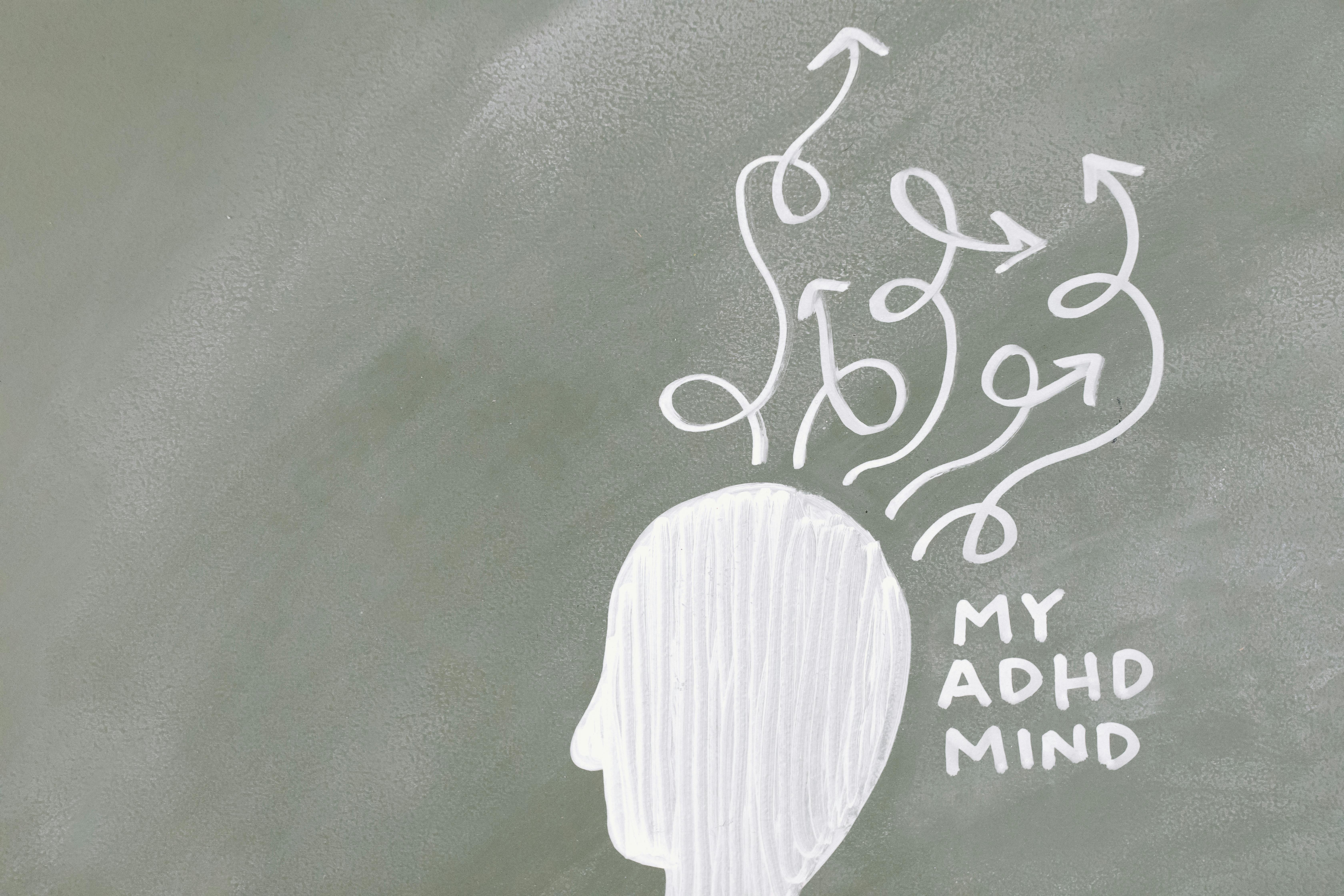
neurodiversity encompasses, among others, individuals with autism, ADHD (attention deficit hyperactivity disorder), dyslexia, and other similar conditions.
Guidelines for neurodiverse individuals
Navigating the academic world, which is often tailored for neurotypical individuals, can be exhausting. Remember, however: your neurodiversity is not a flaw in the system, just a different cognitive architecture.
Here are some practical tips to help you take care of yourself, leverage your strengths, and communicate your needs effectively:
Build a "toolkit" (Self-Advocacy)
You don't have to wait for someone to guess what you need. You have the right to support.
- Prepare "scripts": If talking to a lecturer stresses you out, prepare a ready-made email template or statement. Example: "Good day, I am a neurodiverse person. To fully focus during class, I use noise-cancelling headphones. I'm letting you know so you don't interpret it as a lack of respect".
- Use the official route: Contact the Department of Accessibility (DZD WUST). Having an official certificate confirming the need for accommodations (e.g. extra time on an exam) removes the burden of repeatedly explaining yourself and negotiating with lecturers.
Manage your energy
Your energy resources for social interactions and processing stimuli are finite.
- Plan "decompression time": If you have two difficult lectures in a row, plan 15 minutes in a quiet place (e.g. on the upper floor of the SKS or in the Library).
- Identify "energy drains": If the white light in the classroom tires you out, wear filter glasses. If the noise in the corridor triggers anxiety, always carry earplugs or ANC headphones. If conversations are exhausting for you, you can limit them.
Hack your own procrastination
For individuals with ADHD or autism, starting a task is the hardest part.
- Body Doubling: Work in the presence of someone else (even if that person is doing something completely different). The mere presence of another person often helps maintain concentration.
- Small steps method (Chunking): Instead of "write a project", put in your calendar: "open Word file and write the title". The first step must be so small it seems ridiculous.
- External memory: Don't trust your working memory. Everything - from deadlines to ideas - write down in one specific app or notebook.
Social relationships: Play by your own rules
You don't have to meet all social expectations.
- Clarity in the group: During project work, say: "Guys, I have difficulty catching sarcasm and implied meanings. Specific instructions on Discord would be helpful for me". Most people will appreciate it, as it makes things easier for everyone.
- Fidgeting is OK: If moving your hands or an object helps you listen, do it. You can choose discreet gadgets (e.g. spinning rings) if you don't want to draw attention.
Forgive yourself for "bad days"
University promotes constant, linear productivity. Neurodiversity often works in leaps and bounds.
- Hyperfocus is a superpower: When you fall into a state of deep focus on an interesting topic, use it - but remember to eat and rest after such a marathon.
- Avoid comparing yourself: The fact that others "just sit down and write" doesn't mean you are a lesser person. Your brain simply needs different "fuel" and different starting conditions.
Did you know?
in Poland there are approximately 400,000 individuals within the neurodiversity spectrum.

Communication – guidelines for neurodiverse individuals
Clearly communicating your needs (so-called self-advocacy) is one of the most important skills you can develop at university. It's not about asking for privileges, but about giving others an "instruction manual" for your mind so that collaboration is effective.
Here's how to do it effectively, professionally, and without guilt:
Principle 1
Model: Need → Reason → Solution
Instead of only describing the problem, present a ready package of information. People usually want to help but don't know how.
Instead of:
"I have ADHD and I can't keep up with taking notes".
Say:
"My brain processes information in a way that makes it difficult to listen and write at the same time (Need/Reason). Could you share the slides after the lecture? That will allow me to fully focus on what you're saying (Solution)".
Principle 2
You don't have to share your diagnosis (Function vs. Label)
Remember that you are not obliged to share medical documentation with every lecturer. You can communicate functional needs.
- Instead of saying: "I am on the autism spectrum", you can say: "I interpret messages very literally. I would appreciate precise project guidelines, preferably in bullet point form".
- This is a professional approach that focuses on work effectiveness rather than your privacy.
Principle 3
Communication in group work
Friction often arises in student groups due to things left unsaid. Set the rules right from the start:
- The "Clear Channel" rule: "Guys, information in written form reaches me best. Can we agree that all key decisions go on Messenger so nothing slips past me in the noise of conversation?".
- Sensory boundaries: "During group study I'll be sitting with noise-cancelling headphones on. It doesn't mean I'm ignoring you - I just think better that way".
Principle 4
Harness the power of email
If face-to-face conversation is stressful for you (which is common with neurodiversity), communicate in writing. You then have time to think through every word.
- Tip: After every important verbal conversation (e.g. at the dean's office), send an email: "Good day, following our conversation today I understand that... Have I understood these steps correctly?"
This is your "safety net" in case of a memory gap or misunderstanding.
- Use the sample emails for various occasions. Below are a few examples to use in different situations.
Principle 5
Choose the right moment
- Be proactive: Don't wait until the exam session or the moment you miss a deadline. The best time to communicate your needs is at the beginning of the semester or when you receive an assignment. Remember that according to the WUST Study Regulations(opens in a new tab) you have until the end of the fourth week of classes in the semester to do this.
- Consultations instead of the break: The break after a lecture is a time of high sensory overload for both parties. It's better to go to office hours or send an email - you'll have the person's full attention.
Sample emails informing about the needs of neurodiverse individuals
Here are three ready-made templates you can copy and adapt to your situation. They are written in the spirit of assertiveness and professionalism, focusing on solutions rather than "asking for favors".
Supporting tools
Use this template if you want to inform about using headphones, fidgets, or the need to receive materials in advance
Subject: [Course name] – information about special educational needs – [Your Name and Surname]
Communication and division of tasks
Message to send on Messenger, Discord, or group email at the start of collaboration
Summary of arrangements
Send this after an in-person visit to have a "record" and be sure nothing was missed
Subject: Summary of arrangements from [Date] – [Your Name and Surname]
Why it matters
1 in 4 people around you is neurodiverse.
Why does it work?
Gives you peace of mind
You have it in black and white what was agreed upon.
Gives others an instruction
The lecturer doesn't have to guess why you're sitting with headphones on.
Builds a professional image
You show that you take responsibility for your own learning process.
Tip
If you have an official certificate from the Department of Accessibility, it's worth attaching it to your first email.